
Properties of Magnesium Products
Magnesium alloys market preview, due to their significant lightweight properties. Its density is approximately 2/3 of aluminum and 1/4 of steel, which can effectively reduce carbon emissions. Meanwhile it can achieve weight reduction, freeing up more design space for key components such as batteries and heat dissipation. Their specific strength is comparable to aluminum. Mg products also possess excellent vibration damping, noise reduction, and electromagnetic shielding properties, enabling them to meet the stringent application requirements of various fields.
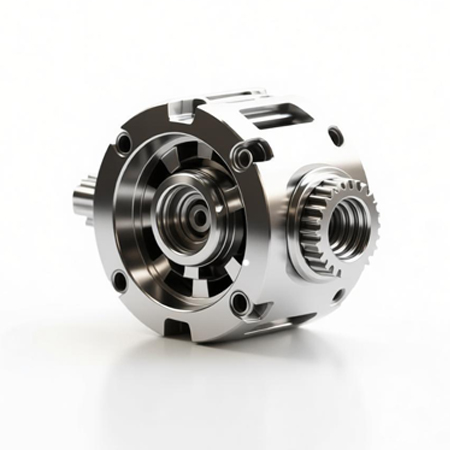
From manufacturing to recycling, magnesium alloys exhibit excellent processing and environmental characteristics. It has low processing energy consumption, small wall thickness, and recycling energy consumption only 5% of primary magnesium. And it is with carbon emission reduction exceeding 95% and continuously improving recycling rates. As the magnesium-aluminum price ratio continues to fall, the process of “replacing aluminum with magnesium” is accelerating. It is expected to drive a significant increase in market demand. Furthermore, their good fluidity and low heat capacity are particularly suitable for precision die casting of complex structures, facilitating highly integrated integrated designs.
In summary, magnesium alloys are with comprehensive advantages such as lightweight, high specific strength, excellent heat dissipation, electromagnetic shielding, and precision forming. It systematically solved many technical challenges in high-end manufacturing, becoming a key material driving green industrial upgrading and product architecture innovation.
Current Magnesium Market and Preview
Let’s take a look back before the magnesium alloy market preview, in 2024, global magnesium consumption totaled approximately 1.12 million tons. Magnesium alloys accounted for 550,000 tons, or 49% of total consumption, making it the dominant sector. The automotive industry is the core demand source, accounting for 70% of magnesium alloy consumption (approximately 385,000 tons). If the indirect consumption of magnesium in aluminum alloys is included, the automotive industry’s magnesium consumption accounts for approximately 50% of global magnesium consumption. The 3C electronics sector accounts for 20% (approximately 110,000 tons). In addition, high-end sectors such as military, medical, and construction account for approximately 10% (55,000 tons), constituting an important supplement to demand growth.
China is the core producer, with primary magnesium ingot production reaching 1.02 million tons, controlling more than 85% of global capacity. Canada and Russia also have some production capacity, but on a relatively limited scale.
Global magnesium consumption is projected to grow to approximately 3 million tons between 2025 and 2030. And the magnesium alloys expected to account for 70%. Magnesium alloy consumption will enter a period of rapid growth, with a projected compound annual growth rate of 34% for global demand from 2026 to 2030, ranking among the fastest-growing metal materials.
Mg Makets preview after 2030
In the 2030’s magnesium alloy market preview, China’s magnesium alloy consumption demand is expected to exceed 1.55 million tons. New energy vehicles will be the primary growth engine. The demand exceeding 1 million tons. The demand is driven by factors including vehicle ownership, new energy vehicles, and increased magnesium usage per vehicle.
Demand in other key sectors is as follows: electric bicycles approximately 150,000 tons. The low-altitude aircraft shares approximately 120,000 tons. 3C electronics 120,000 tons, rail transportation 80,000 tons, aerospace 40,000 tons, and robotics 40,000 tons. The compound annual growth rate will be 93%, making it the fastest-growing sector). Global consumption in other sectors is projected to exceed 50,000 tons. Growth in all sectors is driven by a combination of factors, including lightweighting upgrades, technological penetration, and replacement demand for existing equipment.